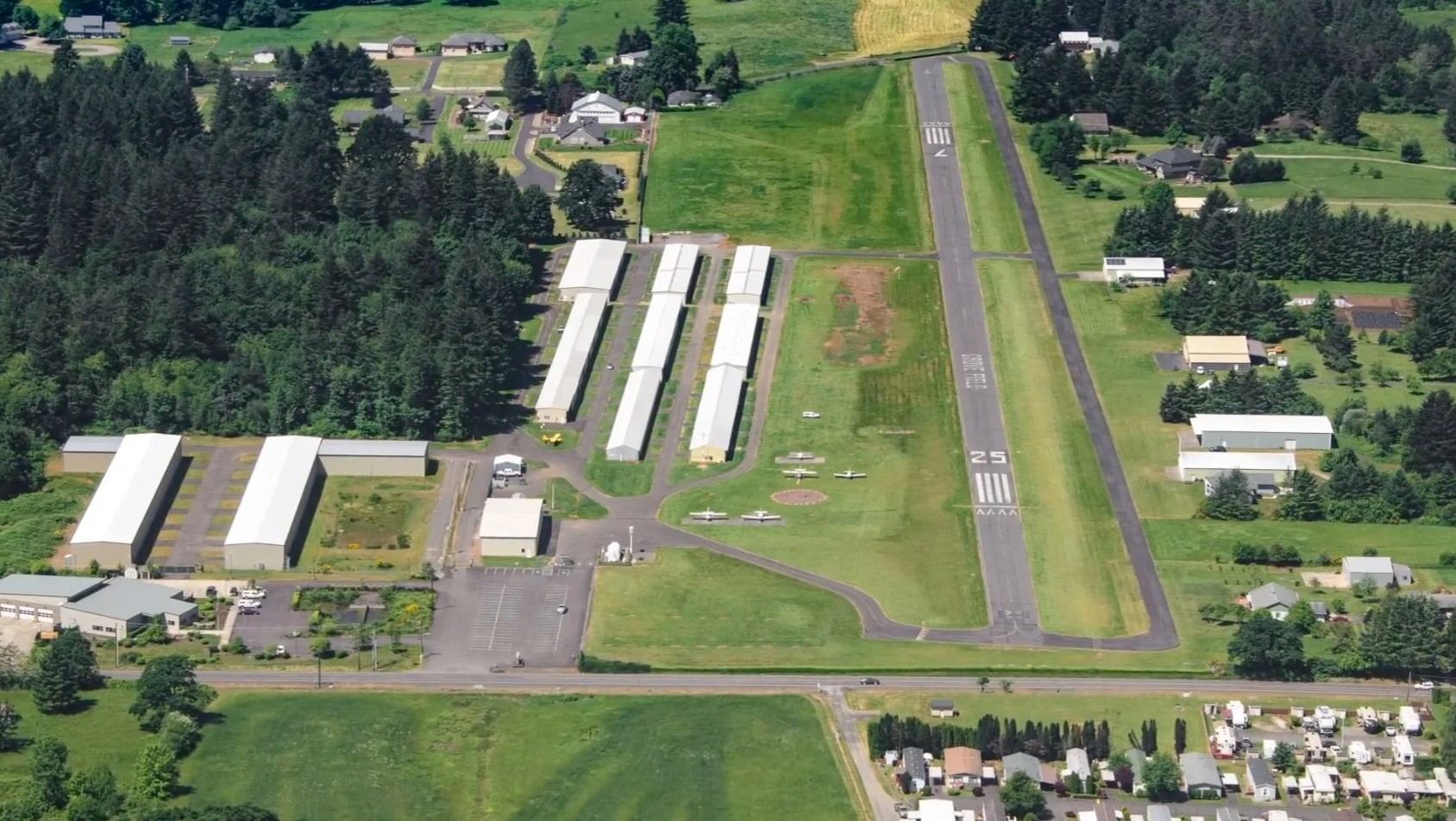
Publishing the concept, the problem, the proposed demonstration and inquiry pathways. This is where the project is today.
Keep critical aviation and emergency functions operating when the grid cannot.
An advanced storage and controls demonstration prioritizing communications, lighting, fueling support and emergency-response loads during grid disruption.
Grant category
Advanced energy storage and grid modernization
Who this is for
Port and airport leadership, emergency management, fire services, utilities, storage/microgrid firms and regional community leaders
Pre-development. This site defines a proposed website for partner formation and opportunity creation; it does not represent a grant award, confirmed host, government endorsement or validated performance.
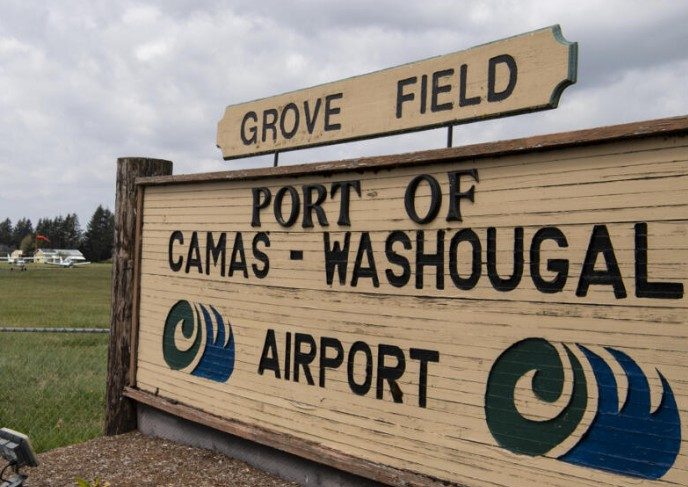
This is Grove Field
A real, working general-aviation airport — not a hypothetical site.
Grove Field is the Port of Camas–Washougal Airport in Washington. The pilot concept on this site is proposed for this specific, operating small airport — not a stand-in or a composite example.
Photos on this site are of the actual Grove Field property. Any description of the airport's prior emergency-response role is limited to what verified Port or public records support. Verified fact
Why small airports matter
A small airport is often the region's last working runway when everything else is down.
General-aviation and small commercial airports frequently sit alongside fire response, medevac staging, and emergency logistics. When the grid fails during a wildfire or a major storm, the airport's own power reliability determines whether communications, lighting, and fueling support stay available to the people responding to the emergency — not just to the airport itself.
Read the resilience mission →
Critical-load hierarchy
Not every load is equal during an outage.
Tier 1 — Life safety
Communications, runway and apron lighting, emergency dispatch coordination.
Tier 2 — Response continuity
Fueling support, fire-cache power, staging-area electrical needs.
Tier 3 — Operational support
Administrative and facility loads that can shed first without compromising safety.
Storage and intelligent dispatch
An advanced storage and controls demonstration, not a guess.
The pilot concept pairs battery storage with a controls layer that prioritizes Tier 1 and Tier 2 loads automatically during a grid disruption, and sheds lower-priority load first.
Pilot design target: keep Tier 1 and Tier 2 loads powered through a multi-day regional outage event. Pilot target
Evidence posture
No islanding capability, storage capacity, or outage performance is claimed before engineering is complete. Any prior emergency-response role at the site is described only using verified Port or public records. Verified fact
Operating scenarios
Designed around the situations that actually put the grid at risk here.
Wildfire response
Public Safety Power Shutoffs and fire-damaged infrastructure can take the grid down
for days during exactly the period when aviation and fire-response capacity matters
most.
Illustrative scenario, not a site-specific forecast. Illustrative scenario
Regional storm outage
Winter storm events can knock out utility power across a wide area while emergency
and medevac traffic through the airport increases.
Illustrative scenario, not a site-specific forecast. Illustrative scenario
Community and responder benefits
Built for the people who show up when it matters.
A resilient airport supports fire crews staging for a response, keeps emergency communications online for the surrounding community, and gives regional leadership a dependable asset to plan around instead of an unknown.
See community and responder benefits →Replication model
Grove Field is the pilot. Small airports are the pattern.
The demonstration is designed to be documented and replicated at other small airports that share the same combination of emergency-response role and grid exposure.
Explore replication for small airports →Help shape the pilot.
Whether you lead emergency response, run a small airport, or bring storage and controls expertise — this is the point where partner input shapes the design.
Frequently asked questions
Is Grove Field Resilience a funded or confirmed project?
No. The venture is pre-development. This site describes a proposed demonstration and exists to form partnerships and surface opportunity — it does not represent a grant award, a confirmed host site, or a government endorsement.
What kind of partner is this looking for?
Two kinds: emergency and aviation-side partners (port and airport leadership, emergency management, fire services, utilities, community leaders) who understand the critical-load problem on the ground, and technology or resource partners (storage, controls, microgrid firms) who can help design and demonstrate a solution.
What is the current grant status?
No award has been made. The project is being positioned for advanced energy storage and grid modernization funding, and status will be updated on the Project Status page as it changes.
What about safety and utility interconnection?
All interconnection, safety and permitting decisions remain with qualified authorities — the utility, the airport, and the relevant fire and safety agencies. Nothing on this site should be read as pre-approval.
Will this become a commercial product?
Possibly, after a demonstration validates performance. Today the focus is the pilot and its replication model for other small airports, not a commercial sale.